



March 8 reminds us that gender equality remains a challenge in all areas, including technology. Artificial intelligence, present in our daily lives, reflects the inequalities of the society that develops it. AI is a tool that has come to stay, being used daily by thousands of people who consider it a source of help and information for both professional and personal matters.
In a society increasingly influenced by its use, many people question its proper functioning and its supposed perfection.
To understand how AI is developed, it is necessary to grasp its functioning in a simplified way: artificial intelligence systems learn from large volumes of data, identify patterns, and, with that information, make predictions or decisions without needing to be explicitly programmed for each situation. However, it is precisely in this process of machine learning that one of the main ethical and social challenges of this technology lies: the perpetuation of inequalities.
AI in the Professional Sphere and the Lack of Women in Its Development
Artificial intelligence is already present in our daily lives, in processes such as personnel selection, medical diagnoses, or security systems, among others. However, studies like “Women in Artificial Intelligence: How AI Is Perpetuating Preexisting Gender Gaps” by Paula López Zamora warn that it is not neutral: “AI could have become a magnificent ally for gender equality, but an analysis of the current reality shows us how even the most advanced technologies continue to construct sexist imaginaries and realities.”
This is also highlighted in the “Preliminary Report with an Intersectional Perspective on Gender Bias in Artificial Intelligence,” published in 2023 by the Instituto de las Mujeres, which emphasizes that algorithms do not act equitably: they reproduce the values and hierarchies existing in society. If equality criteria are not incorporated from the start, AI can perpetuate stereotypes and produce significant discriminatory effects.
A notable example is personnel selection: some automated screening systems have penalized women’s resumes by associating leadership with male career paths, reproducing historical hiring patterns dominated by men.
One of the key issues lies in the lack of diversity in the sector. According to the World Economic Forum, only around 22% of those working in artificial intelligence are women. The Instituto de las Mujeres and organizations such as UNESCO have warned that this underrepresentation limits the plurality of perspectives and hinders the incorporation of a gender perspective in algorithm design.
Thus, the limited presence of women constitutes inequality within the technology sector and directly influences how systems are developed, affecting employment and other areas of social life.
Women role models in the sector
Women are leaving a decisive mark on technology and artificial intelligence, leading key advances in the sector. Historically underrecognized, today their achievements inspire new generations and consolidate their role as essential role models in science and innovation.
We are many people who have heard of Mira Murati, one of the main people responsible for ChatGPT and a key figure at OpenAI, but she is not the only woman making an impact in artificial intelligence; her example reminds us of the importance of highlighting all the people leading advances in the field.

Gemma Galdon: Expert in Technology Ethics and Algorithm Auditing
She is an expert in technology ethics and algorithm auditing, and the founder of Eticas.ai. Thanks to her multidisciplinary experience in the social, ethical, and legal impacts of data-intensive technology, she and her team design and implement practical solutions to address challenges in data protection, ethics, AI explainability, and bias.
Joy Buolamwini: Leading a Fairer and More Responsible AI
Computer scientist and founder of the Algorithmic Justice League, dedicated to promoting equity in artificial intelligence. Her research on biases in facial recognition, particularly with darker-skinned faces, has been crucial in raising awareness about the importance of transparency and accountability in AI, influencing new policies and ethical regulations.
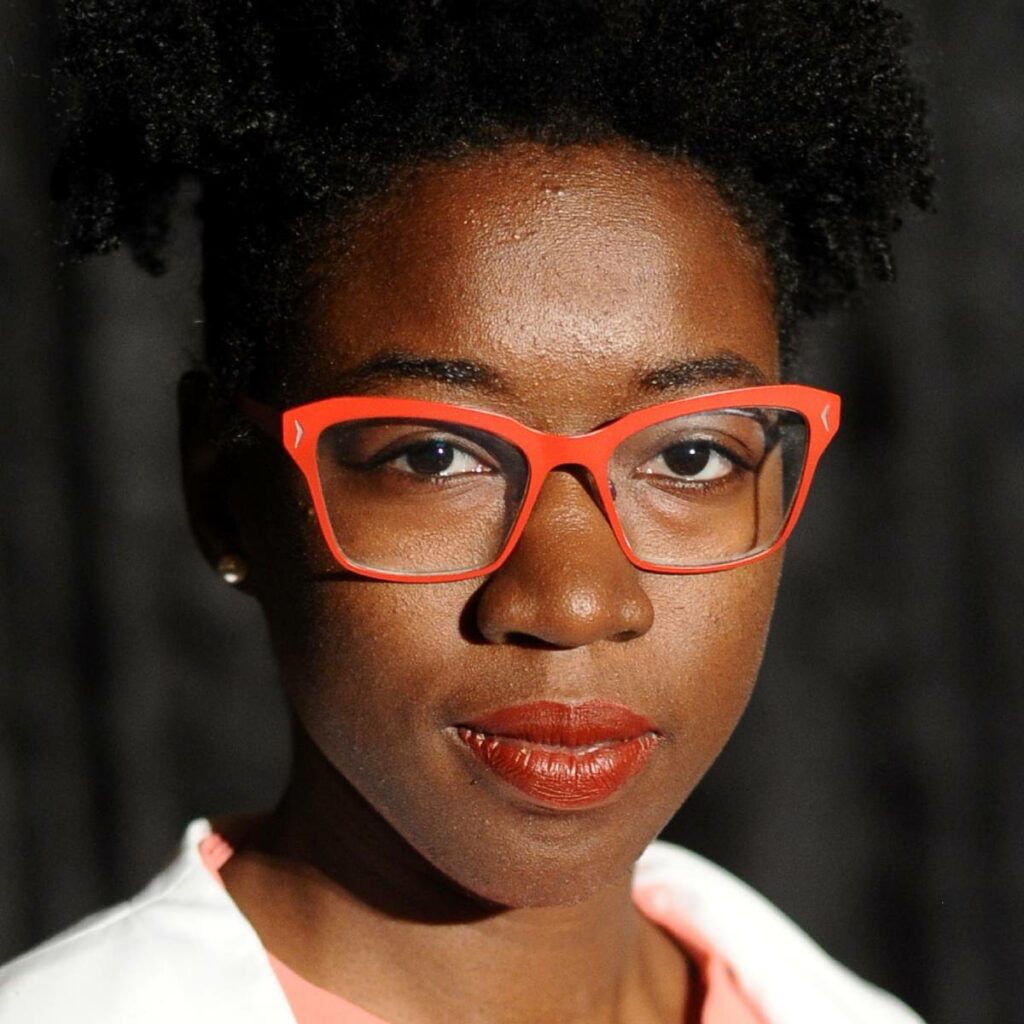

Nuria Oliver: Advocate for Ethics and Human Values in AI
Chief Data Scientist at Vodafone Group and one of the most internationally recognized Spanish experts in artificial intelligence. A strong advocate for ethics and human values in AI, she has also worked at Telefónica and collaborates with Data-Pop Alliance, promoting initiatives aimed at increasing the presence of women in engineering and data science.
Karina Gibert: Prominent Voice for Gender Equity in Technology
Computer engineer and professor at the Universitat Politècnica de Catalunya, where she leads the IDEAI-UPC research center. Gibert is a prominent voice in AI ethics and gender equity in technology, and she also serves as an advisor on the CETRA committee. Recognized by Forbes as one of the 100 most influential women in Catalonia and awarded the Parliament’s Medal of Honor, she represents a key reference in AI within the Catalan context.

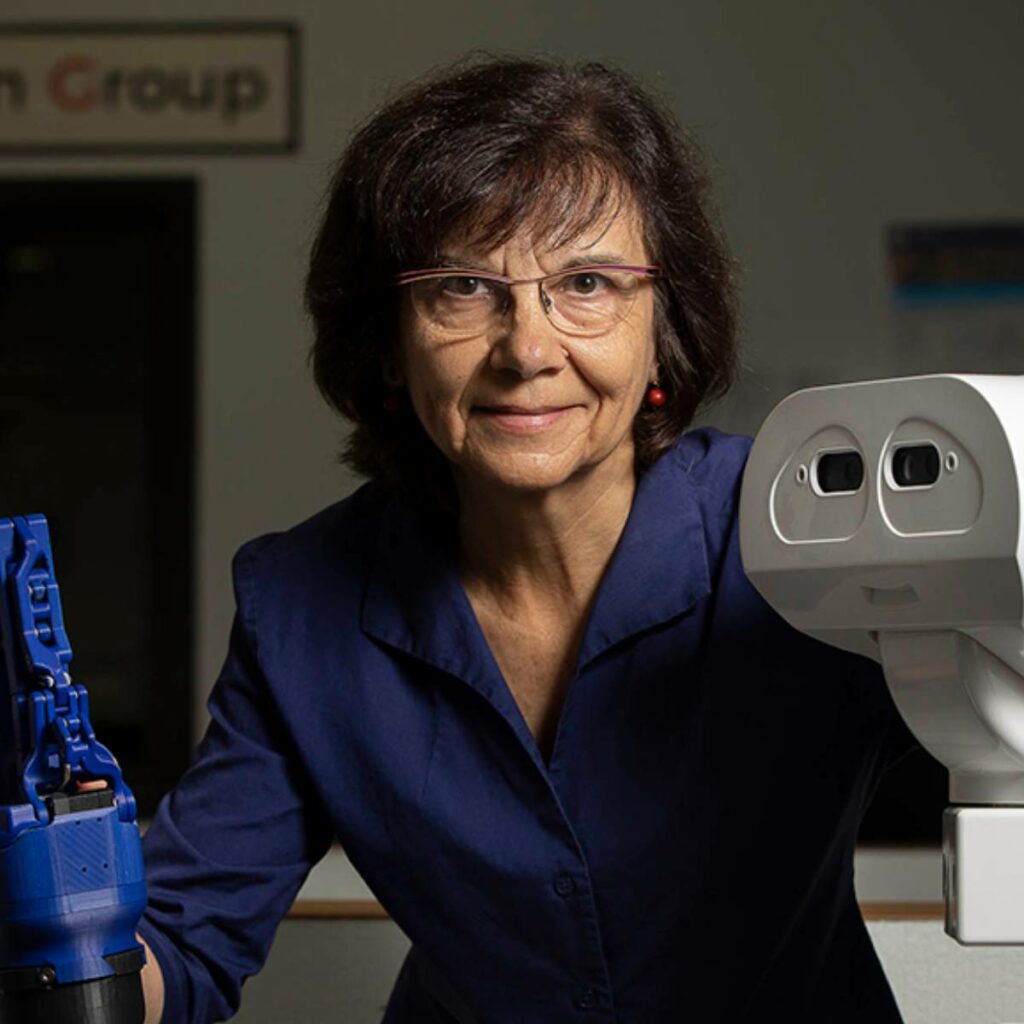
Carme Torras: PhD in Computer Science and author of science fiction novels
Doctor in Computer Science from the Universitat Politècnica de Catalunya (UPC) and a graduate in Mathematics from the University of Barcelona (UB). She has led research projects in assistive robotics, combining technology with the promotion of ethical practices in its application. In addition to her scientific career, she is a writer and author of science fiction novels related to robotics and artificial intelligence.