


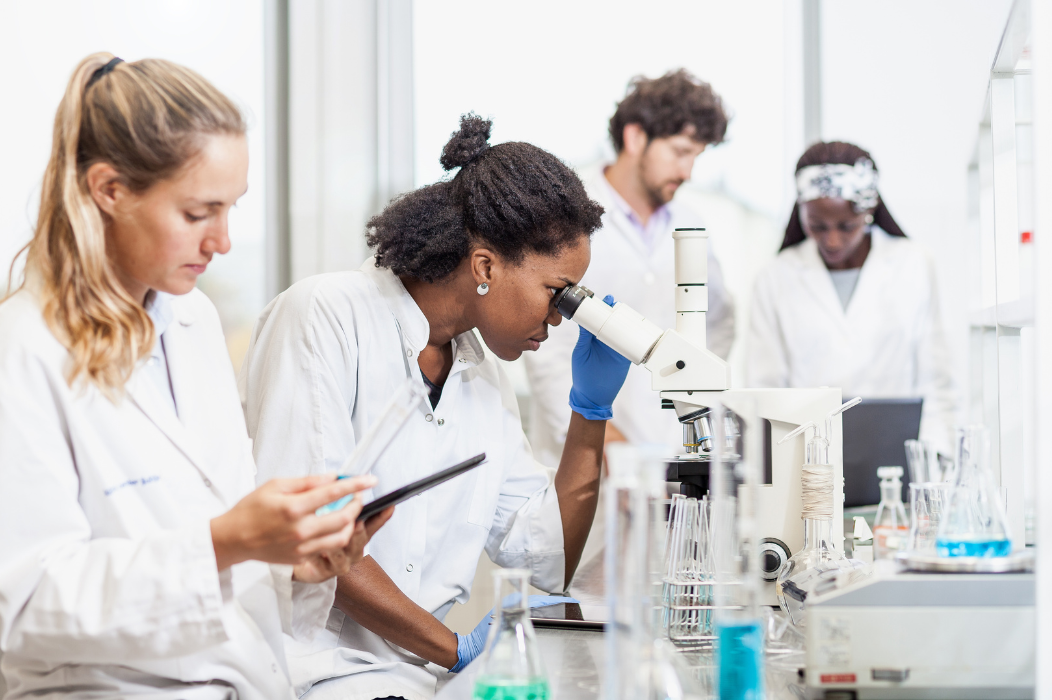
Every 11 February, the International Day of Women and Girls in Science is commemorated. It remains a necessary date, as genuine equality in this field has yet to be achieved.
Although more and more women are entering scientific studies, their presence gradually decreases as they progress along the research career path. This phenomenon is known as the leaky pipeline: the system loses female talent at different stages, particularly at levels associated with greater stability, leadership and recognition.
Gender equality in science is not only a matter of social justice, but also a key condition for more diverse, innovative research that is better aligned with societal challenges. However, structural and cultural barriers continue to limit the full participation of women and girls in this field.
The situation in Spain
The report Científicas en Cifras 2025, published by the Spanish Ministry of Science, Innovation and Universities, provides an up-to-date diagnosis of gender equality within Spain’s science and innovation system. The data reveal an ambivalent reality: clear progress in access, but persistent inequalities in career progression.
Women are the majority in higher education (57% at undergraduate level and 56.4% at master’s level) and have reached parity at doctoral level (50.2%). However, they remain underrepresented in traditionally male-dominated STEM fields, such as Engineering and Architecture, where they account for just over 28% at undergraduate level.
In the R&D labour market, women represent 39.6% of research staff, with significant differences across sectors: parity has been reached in Public Administration (50.5%), but female representation drops to 31.2% in the business sector. The leaky pipeline becomes particularly evident at the highest levels of the scientific career: only 27% of university professorships and 26.6% of top positions in public research organisations are held by women.
A global reality
This pattern is not unique to Spain. At a global level, women account for around 33% of research personnel, according to data from international organisations. In the European Union, although women make up close to 48% of doctoral students, only 26% reach the highest academic positions, according to the She Figures 2024 study.
Inequality is even more pronounced in institutional leadership roles: only around 24% of research and higher education institutions in the EU are headed by women, confirming that the main challenge lies not in initial access, but in progression and retention within the scientific system.
UNESCO warns that these gaps stem from persistent structural factors, such as gender stereotypes, a lack of role models, difficulties in work–life balance, and biases in evaluation and promotion processes.
How can we fix the leaky pipeline?
Fixing the leaky pipeline requires action beyond education and a systemic approach. It is essential to promote policies that ensure fair working conditions, equitable evaluation processes and genuinely effective work–life balance measures.
Cultural change is also crucial. The language we use and the role models we make visible directly influence how girls and young women imagine themselves — or fail to do so — in science. Highlighting diverse career paths, challenging stereotypes and communicating science from an inclusive perspective are key tools to prevent female talent from continuing to leak out of the system.
Commemorating the International Day of Women and Girls in Science is, ultimately, an opportunity to remind ourselves that talent exists — but the system still needs deep changes to ensure it does not lose it along the way.